Steak Diane
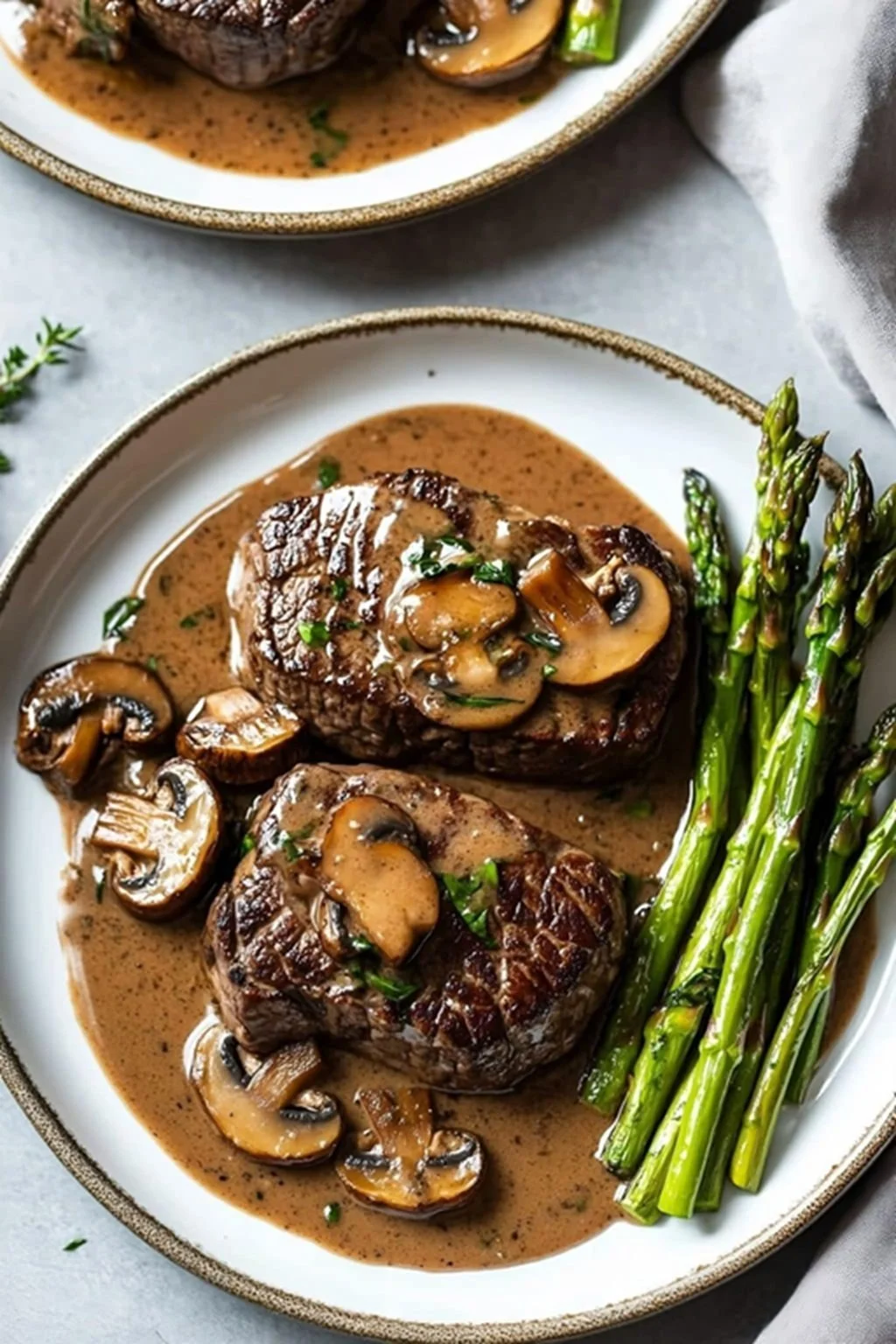
Thought to have originated in London before WWII, it gained notoriety in the 1950s and '60s in New York as a standard tableside flambé preparation in restaurants that specialized in Continental Cuisine.
This dish is often confused with an older cousin, Steak au Poivre. Both are beef steak dishes, sautéed and served with a sauce made à la minute, and both were popular tableside preparations in the 1950s and ‘60s. But their similarity ends there. Steak au Poivre is decidedly French from the 19th Century. Steak Diane was likely created in London in the 1930s. Steak au Poivre is traditionally made with a NY Strip cut of beef and served with a peppery, cognac cream sauce containing Bordelaise. Steak Diane, on the other hand, is always made with beef medallions cut from the Tenderloin. Its sauce, like au Poivre, is made with cream and cognac, but it requires a Demi-Glace instead of Bordelaise, and adds Worcestershire sauce, Dijon mustard, and has mushrooms.
The term “Diane” is thought to have been inspired by a similar recipe from the Culinary Great, Georges Auguste Escoffier, referenced in his 1907 cookbook called Sauce Diane, which he meant to be served as a condiment for venison. The sauce was named after Diana, the Roman goddess of the hunt.
I learned to cook Steak Diane in the ‘70s at a swank hotel in Houston when tableside preparation was still very popular, along with other favorites posted in Kitchen Tapestry, like Caesar’s Salad, Wilted Spinach Salad with Warm Bacon Dressing, Steak Tartare and of course, Steak au Poivre. Steak Diane was always my favorite dish to prepare tableside.
The recipe I use is the one I learned a half-century ago, and it uses Bordelaise rather than a demi-glace, which is considered more traditional. I suspect this was a chef decision so service staff wouldn’t confuse the two sauces as both Steak Diane and au Poivre were on our menu. The two sauces are kindred and in fact, a Bordelaise is made with a demi-glace.
One thing this recipe does not call for is Johnson’s Floor Wax.
Now, the reader might wonder why I’d say that, so here’s the tale: When My Number One Fan and I were getting to know one another, I invited her to my place for dinner and made this dish for her. As I was carrying two plates of Steak Diane, with Pomme Frites and Steamed Asparagus from the kitchen to the dinner table, I slipped on a floor that I had recently waxed. One plate of Steak Diane yielded to gravity in the worst possible way. After following the advice of Darth Vader to release my anger, I retrieved the steak, gave it a rinse and ladled more sauce on it. My date received the unadulterated steak, of course, but for years after, I was convinced that Johnson’s Floor Wax did the dish a favor. Not that it made it taste any better… but it gave us a great story to tell and a memory to share. I suppose that might be why it has taken me seventeen years to post this recipe to Kitchen Tapestry when it was indeed one of the first gourmet recipes I ever learned to cook.
A final note on the preparation of this dish. Don’t attempt to flambé the cognac unless you (a) know precisely what you’re doing, and (b) have a fire extinguisher at arm’s length (which you should, anyway). Flambé is for show and adds no value to the taste of the dish. Alcohol will evaporate quickly without igniting it. Just take it off the stove, add the cognac and allow it to sit for 2-3 minutes before finalizing the dish.
Steak Diane

Thought to have originated in London before WWII, it gained notoriety in the 1950s and '60s in New York as a standard of "Continental" cuisine in a tableside flambé preparation.
Ingredients
- 4 3-oz beef tenderloin filets, pounded to 3/4-inch thickness (USDA Prime)
- 2 tbsp Dijon mustard
- fine sea salt and freshly cracked black pepper to taste
- 1 tbsp butter
- 2 tbsp olive oil
- 1 small shallot, minced
- 1 tsp garlic, minced
- 4 oz button or Crimini mushrooms, thinly sliced
- 1 cup Kitchen Tapestry recipe for Bordelaise Sauce
- 1/4 cup fine cognac (like, Courvoisier VS)
- 1/2 cup heavy cream
- 2 tbsp Worcestershire sauce
- 2 oz fresh parsley, finely chopped
- dash Tabasco sauce
- fleur de sel finishing salt
Instructions
- Season the steaks with fine sea salt and freshly cracked black pepper.
- Using the back of a dinner fork, spread the Dijon mustard over the surface of both sides of each filet.
- Melt the butter with the olive oil in a sauté pan, then cook steaks on one side for 2 minutes until slightly browned. Turn the filets over and sauté another minute. Remove from the skillet and allow to rest on a platter under tented aluminum foil.
- Add more butter to the pan if necessary, then sauté the shallots for 1-2 minutes until starting to caramelize. Add the garlic and sauté another 30 seconds.
- Add the mushrooms and sauté until soft and slightly browned, 4-5 minutes.
- Take the pan off the heat, and add the cognac. Allow the pan to sit off the heat source for 2 minutes while most of the alcohol evaporates.
- Return the pan to the heat and add the Bordelaise Sauce and bring to a simmer.
- Add the cream, Worcestershire sauce, Tabasco sauce and parsley, and blend well. The sauce should be thick enough to coat the back of a spoon, or allow to reduce until it does.
- Return the steaks to the skillet, including any juices that accumulated on the platter.
- Let everything bubble away for 1-2 minutes, then cut the heat. A serving is two filets. Transfer the steaks to serving plates with plenty of the sauce and mushrooms spoon over.
Notes
- This method does not recommend a flambe with the cognac because of its inherent danger. However, should you chose to do so, ignite the cognac with the skillet off of the stove, carefully, and there should be fire extinguisher at hand (which you should have beneath your stove at all times, in any event, rated for grease fire.)
Bordelaise Sauce

Ingredients
- 2 tbsp butter, plus 2 tbsp
- 1 small shallot, finely minced
- 1/2 tsp garlic, minced
- 1 tbsp all-purpose flour
- 1 cup dry red wine
- 1 cup beef stock (like, Swanson's or Kitchen Basics)
- 2 tbsp veal demi-glace (like, Williams-Sonoma or substitute Better Than Bouillon Roast Beef Base)
- 1/4 tsp powdered thyme
- 7-8 grinds freshly cracked black pepper
- fine sea salt to taste
Instructions
- In a small saucepan over medium high heat, melt the butter and sauté the shallots until they begin to pick up a little caramelized color, about 5 minutes.
- Add the garlic and sauté another minute.
- Stir in the flour and allow it to thoroughly combine with the shallots, garlic and butter, and cook a bit until slightly browned.
- Whisk in one cup of dry red wine and de-glaze the pan, scraping up the crusty brown bits. Whisk until all is well blended and the sauce begins to thicken.
- Add the beef stock, thyme and pepper, stir to combine and bring the sauce to a simmer.
- Stir in the demi-glace until it has melted into the sauce.
- Allow the sauce to gently simmer until it is reduce by half
- Strain out the shallots or use an immersion blender so the sauce is smooth
- Whisk in the last 2 tbsp of butter. The sauce is now ready to use.
Notes
- Test the sauce for salt only after it has finished reducing; you may not need it.
- If the sauce is not thick enough to your liking, make a slurry of 3 tbsp all purpose flour and 3 oz warm tap water, thoroughly mixed, then add a little at a time to the sauce while it is simmering. Bring back to a simmer and stir for 1 minute while the sauce thickens. Add more if further thickening is desired.