The RV Omelet
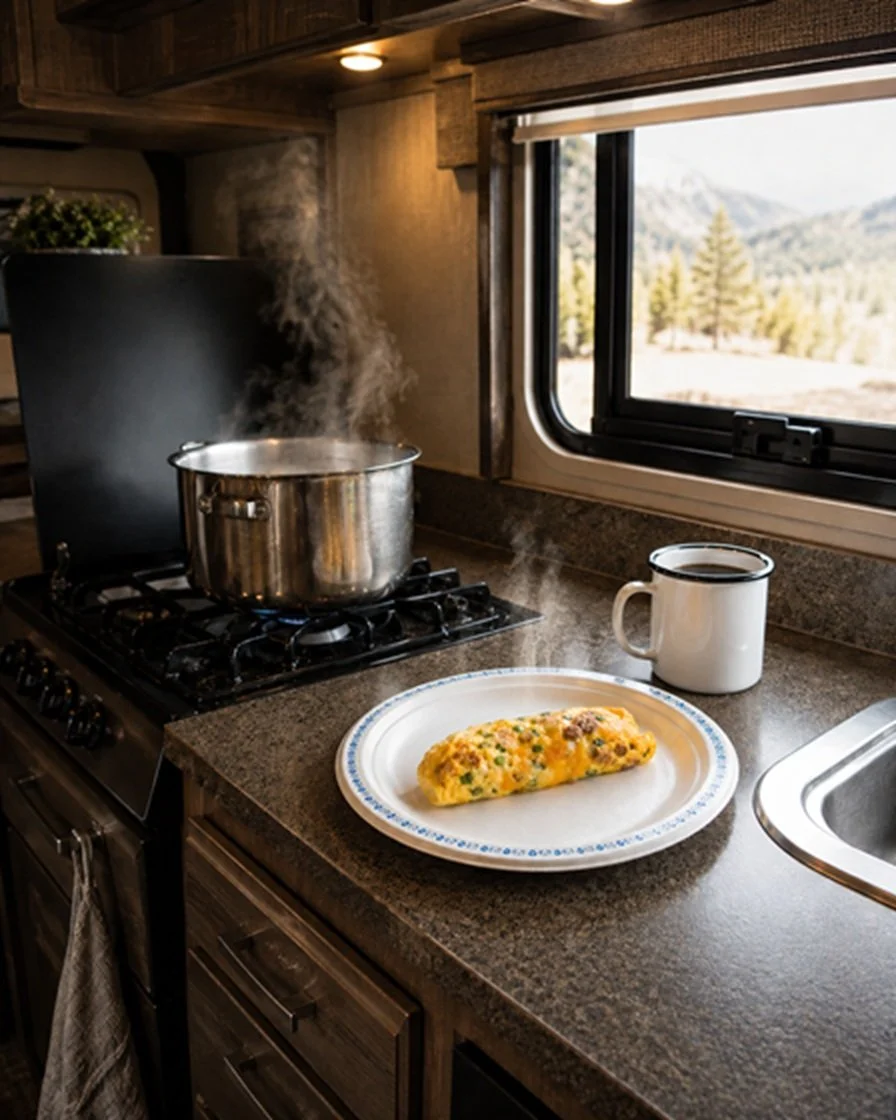
You don’t have to be in a recreational vehicle to make this omelet. But its simplicity with few kitchen tools and minimal food prep make it an ideal recipe for a a camper or a cookout.
My Number One Fan found this recipe in the early 2000s. I named it the RV Omelet because it’s just the kind of recipe you’d want if camping out or traveling across country in a camper. It requires only two pieces of hardware: a pot to boil water in, and the bags in which you prepare and cook the omelets. And the latter, apparently, evoked the ire of a number of commenters when I first published this recipe in the original Kitchen Tapestry of 2009. Several folks were kind enough to offer their caution that cooking food in a storage bag in boiling water would surely cause any number of plastic-infused maladies. Even the SC Johnson Ziploc and Glad websites cautioned against it.
Well, of course they did. Do you think their legal departments would do anything otherwise? If they were to say, "Sure, boil away," they'd assume responsibility for every split seam, burn injury, or complaint. So their official recommendation is simply don't use our storage bags for boiling or sous vide. But food scientists who work with sous vide cooking consider modern plastic bags made with polyethylene completely safe.
Whatever concern the recipe blog-o-sphere had in the early 2000s, it has largely recovered today. This recipe is all over the Internet like a rash. And in point of fact, for one omelet cooked for 15-minutes, there is no convincing evidence that you're exposing yourself to a meaningful health risk by using a quality freezer bag. If there were, sometime in the last twenty years, we’d be seeing TV ads for lawyers who specialize in polyethylene product liability lawsuits.
Still, it would be inaccurate to say there is zero migration. Virtually every food-contact material transfers tiny amounts of substances into food under heat. The question is whether those amounts are biologically significant, and for polyethylene bags under these conditions, evidence hasn't shown a clear health hazard.
But, be smart about the bags you use:
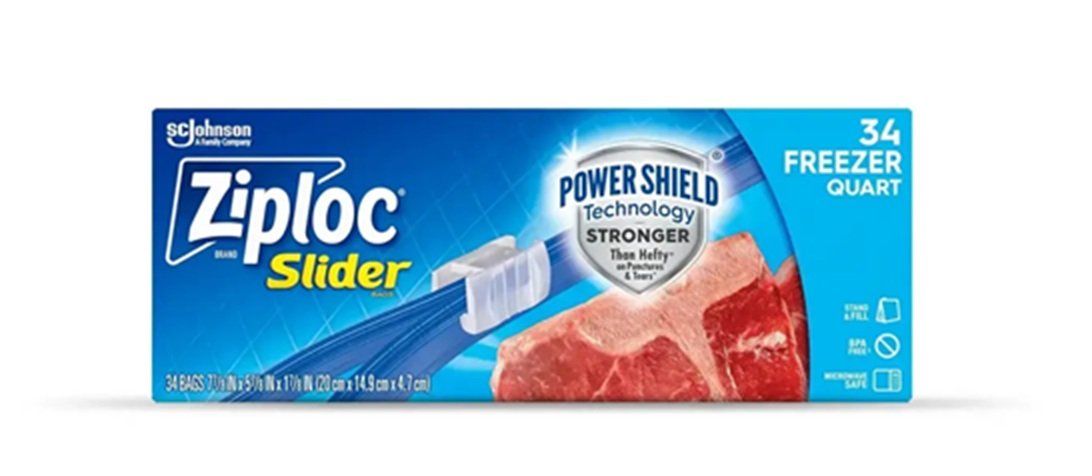
Use a quality freezer bag which is about 50% thicker than the more common storage bag.
Use a bag from a major manufacturer. Name-brand freezer bags are made from polyethylene, which does not contain BPA.
Use a zip-style slider closure bag, not the press-seal style.
So, the bottom line is this:
Occasionally? Don’t lose sleep over making an omelet this way using a name-brand freezer bag omelet.
Every morning for years? Use a silicone sous vide bag or simply cook the eggs in a nonstick skillet.
Of course, you don’t need to be camping to enjoy an omelet this way, and in fact, it makes for a fun group exercise if you’ve had stay-over guests. Everybody cracks two eggs into a freezer bag with their name on it, and from a central display of crumbled bacon, sausage crumbles, chopped Canadian bacon, assorted cheeses, snipped chives, chopped green onions, chopped jalapenos or green chilies, they mix in whatever ingredients they choose. Then, each person tosses their omelet in a pot of boiling water and checks their watch. No tomatoes, though. My Number One Fan and I learned the hard way that their high water content in tomatoes will ruin the omelet and make it soupy. Serve Bloody Marys on the side instead.
The RV Omelet

You don’t have to be in a recreational vehicle to make this omelet. But its simplicity with few kitchen tools and minimal food prep make it an ideal recipe for a a camper or a cookout.
Ingredients
- 4 large eggs
- 1 cup cooked sausage crumbles, divided (like, Jimmy Dean's Fully Cooked Sausage Crumbles)
- 1/2 cup sharp cheddar cheese, shredded and divided (like, Kraft Triple Cheddar Blend)
- 1 green onion, chopped and divided
- 1 tsp Morton's Nature's Seasons Seasoning Blend, divided
- 2 quart-sized zip-lock style freezer bags, (like Ziploc Slider Freezer Storage Bags)
Instructions
- Bring a large pot of water on the stove over high heat to a rolling boil.
- In the meantime, crack two eggs into each freezer bag. Seal the bag with as much air as possible in the bag, then shake it vigorously to blend the eggs together.
- Add the sausage, cheese, green onion and seasoning blend into each bag and using the same technique, vigorously blend all the ingredients together.
- Squeeze as much air as possible out of each bag and seal them tightly.
- Using tongs, gently place both bags in the boiling water. Keep the water at a rolling boil.
- Cook 13-14 minutes.
- Remove the bags from the boiling water and carefully unseal the bag, then roll the omelet out onto a plate and serve.
Notes
- Water boils at a slightly lower temperature at high altitudes and therefore cooks food more slowly. In altitudes above 5,000 feet, add three minutes to the cooking time.
- Add chopped, cook bacon or chopped Canadian bacon as a substitute to sausage. Add difference cheeses, like Swiss, Provolone or Monterrey Jack. Substitute snipped chives for green onion.
- Do not add tomatoes to the omelet, however. Their high water content will make the omelets soupy.