Sweet and Sour Red Cabbage (Rotkohl)
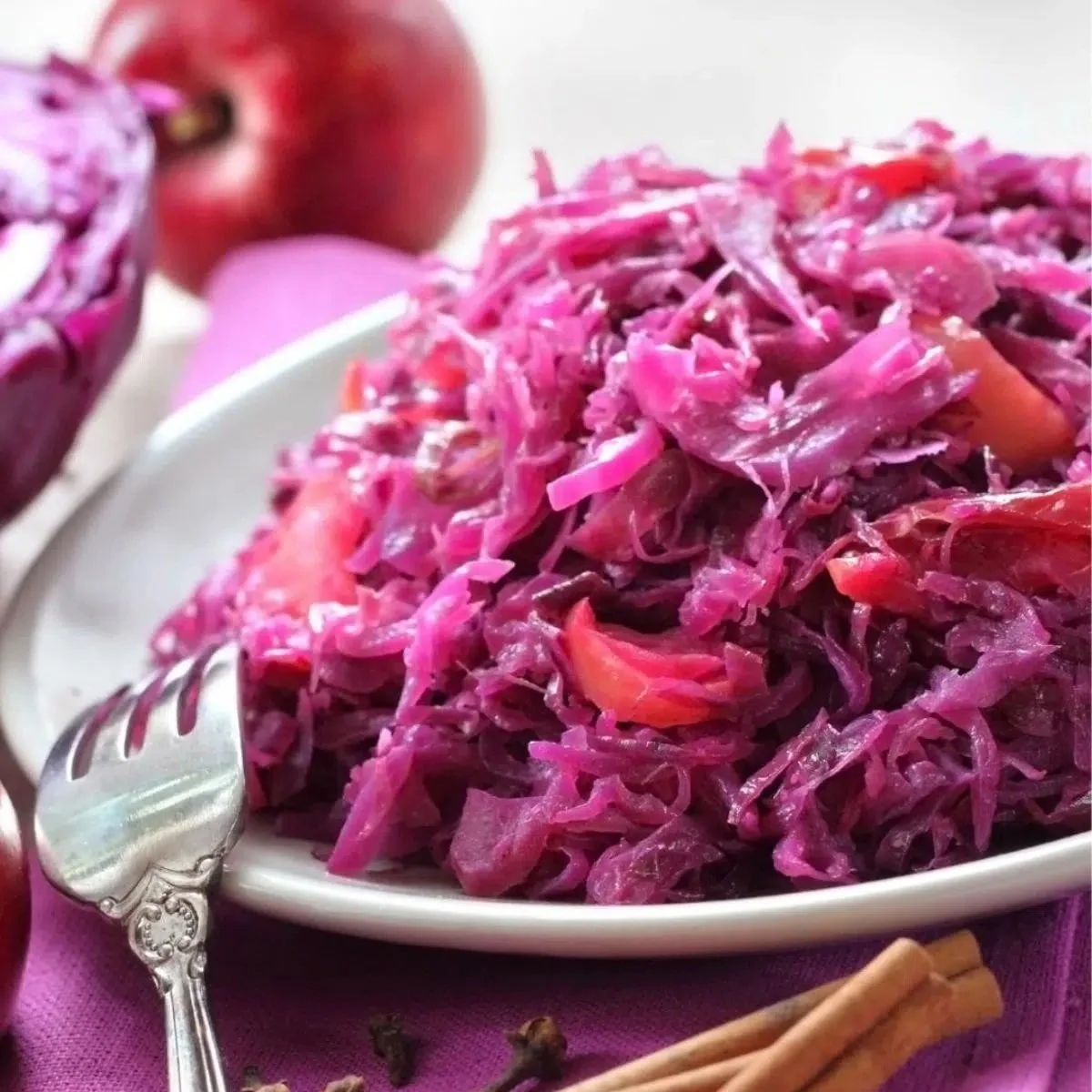
Cabbage has been cultivated from antiquity, but this dish evolved in medieval Europe.
Its origins are quite old, although pinning down the first German sweet-and-sour red cabbage recipe is difficult because the dish evolved from medieval European cabbage cookery rather than being invented at a particular time.
Cabbage itself has been cultivated in Europe since antiquity. The Romans ate cultivated cabbages, but the tightly headed red and white cabbages familiar today developed in Europe during the Middle Ages. By roughly the 12th–14th centuries, headed cabbage was an established crop in German-speaking Central Europe.
The important next step was the medieval German fondness for combining sour and sweet flavors. Before refrigeration, vinegar was a standard cooking and preserving ingredient, while medieval and early-modern cooks frequently balanced it with honey and, later, increasingly available sugar. Spices such as cloves, cinnamon and pepper were expensive imports at first, but they appear repeatedly in the cooking of prosperous German households.
By the 16th and 17th centuries, German cooks were preparing cabbage by braising it in animal fat and seasoning it with combinations of vinegar, sweetness and spices. That is essentially the culinary ancestor of modern Rotkohl. Apples became an especially natural addition because they were plentiful in German-speaking regions and provided both sweetness and acidity.
The same dish developed different names regionally: Rotkohl predominates in northern and central Germany, Rotkraut in parts of central and southwestern Germany, and Blaukraut in Bavaria and Austria.
By the 18th century, something recognizable as today's dish was well established: finely sliced red cabbage, slowly braised with fat, vinegar, sweetener and aromatic seasoning, frequently with apple. It became particularly associated with hearty autumn and winter meals — roast pork, sausages, Sauerbraten, duck, goose, venison, potatoes, dumplings and Spätzle. That's why it feels so naturally at home on an Oktoberfest-style table, even though it isn't specifically an Oktoberfest invention.
Sweet and Sour Red Cabbage (Rotkohl)

Cabbage has been cultivated from antiquity, but this dish evolved in medieval Europe.
Ingredients
- 4 rashers thick cut bacon, cut into lardons
- 1 medium head red cabbage, cored and chopped into bite size pieces
- 2 tbsp unsalted butter
- 2 tbsp table sugar
- 1/4 cup balsamic vinegar
- 1/4 cup chicken stock (like, Swanson's or Kitchen Basics)
- 1 firm sweet apple, peeled, cored and cut into bite size pieces (like, Fuji or Honeycrisp)
- 1/16 tsp ground cloves
- 1/16 tsp ground allspice
- 1/4 tsp fine sea salt
- 8-9 grinds freshly ground black pepper
Instructions
- Heat a large Dutch oven or large stock pot with a tight fitting lid over medium high heat.
- Sauté the bacon until it has rendered, but not crispy.
- Sauté the cabbage over medium high heat until it begins to wilt, about 15 minutes.
- Stir in the balsamic vinegar and chicken stock, turn the heat down to medium, put on the lid and cook for 1-1/2 to 2 hours, stirring every 20 minutes or so, until the cabbage is fork tender.
- Add the butter, apple, sugar, ground clove and ground allspice, salt and pepper and continue to sauté with the lid removed for another 20-30 minutes until all liquid has evaporated.